BLCU Continuing Education College
Chinese Language Education Platform

Sign Up
Log in
BLCU Continuing Education College
Chinese Language Education Platform
As the Chinese Proficiency Test continues to evolve, the transition from HSK 2.0 to HSK 3.0 is gradually underway. According to recent updates, the HSK exam is expected to progressively adopt the 3.0 standard starting from the second half of this year. While most test centers are currently still using the HSK 2.0 format, many Chinese learners are still wondering: What exactly has changed in HSK 3.0 compared to HSK 2.0?

In this series, we will break down the key differences between HSK 2.0 and HSK 3.0 level by level. In this article (Part 1), we focus on HSK 1, exploring changes in vocabulary, exam format, and overall difficulty under the new standard.
1. Vocabulary Comparison
One of the most noticeable changes in HSK 3.0 is the increase in vocabulary.
|
Level |
HSK 2.0 |
HSK 3.0 |
Increase |
|
HSK 1 |
150 words |
300 words |
+150 |
What this means:
HSK 3.0 doubles the vocabulary requirement for HSK 1. Learners are expected not only to recognize more words, but also to use them in context. This reflects a shift toward more practical language ability.
2. Changes in Exam Format
The number and distribution of questions in the 2.0 and 3.0 HSK 1 exams are the same.
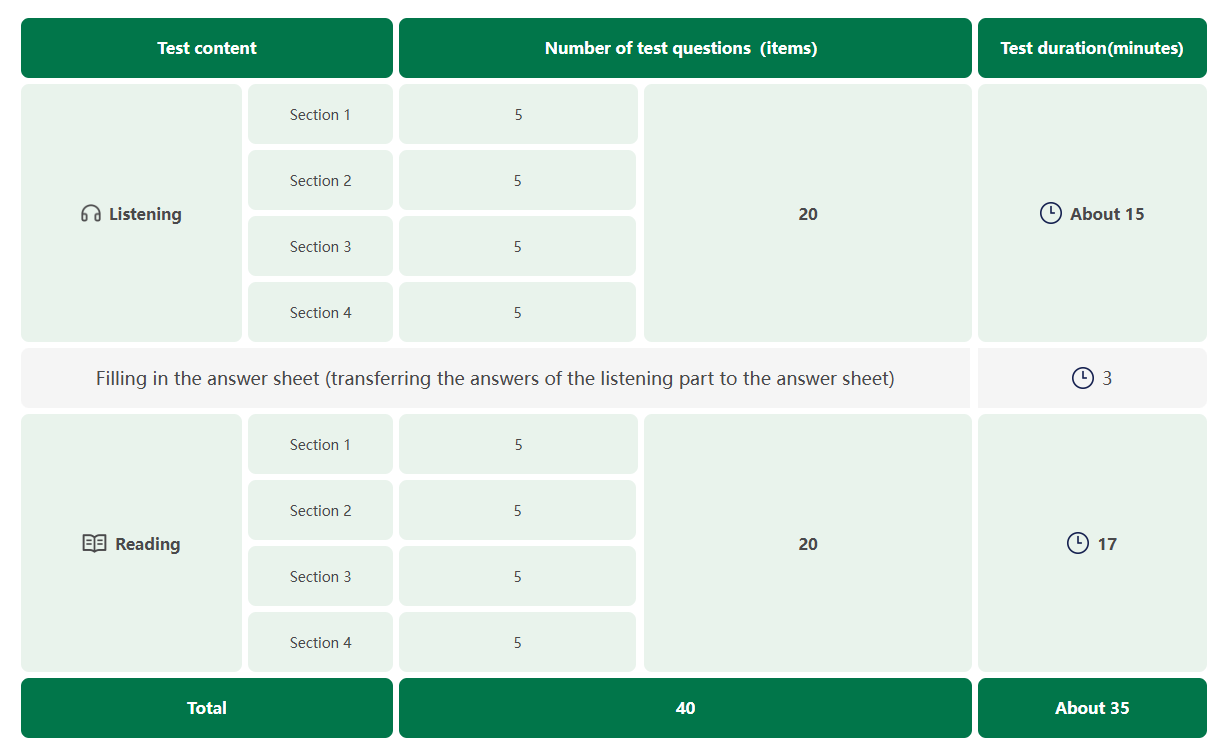
Although the overall structure of the exam may look similar, the question types have been adjusted, and the difficulty has increased.
HSK 2.0 (Old Format):
Question 1: Listen and judge whether the picture matches the audio
Question 2: Listen and choose the correct picture (A/B/C)
HSK 3.0 (New Format):
Removed: “judge picture” questions
New Question 1: Listen and choose the correct picture (from old Question 2)
New Question 2: Listen and choose the correct text answer (new question type)
Question 3 & 4: Similar to HSK 2.0
Listen to dialogues → choose correct picture
Listen to sentences/questions → choose correct text answer
Key change:
Less reliance on pictures, more focus on understanding spoken Chinese and selecting correct written answers.
HSK 2.0 (Old Format):
Question 1: Match pictures with sentences
HSK 3.0 (New Format):
Removed: picture matching question
Questions 1–3: Same as HSK 2.0 Questions 2–4
New Question 4:
Read sentences and questions → choose the correct answer
Key change:
Greater emphasis on sentence comprehension and reading ability, rather than simple visual matching.
3. Overall Difficulty
Even though the exam structure appears similar, HSK 3.0 is clearly more challenging:
Conclusion:
HSK 3.0 tests real language ability, not just recognition.
4. Speaking Test
For HSK 1, there is still no oral exam.
Final Thoughts
The transition from HSK 2.0 to HSK 3.0 reflects a major shift in Chinese language assessment:
If you’re preparing for HSK 3.0, it’s important to:
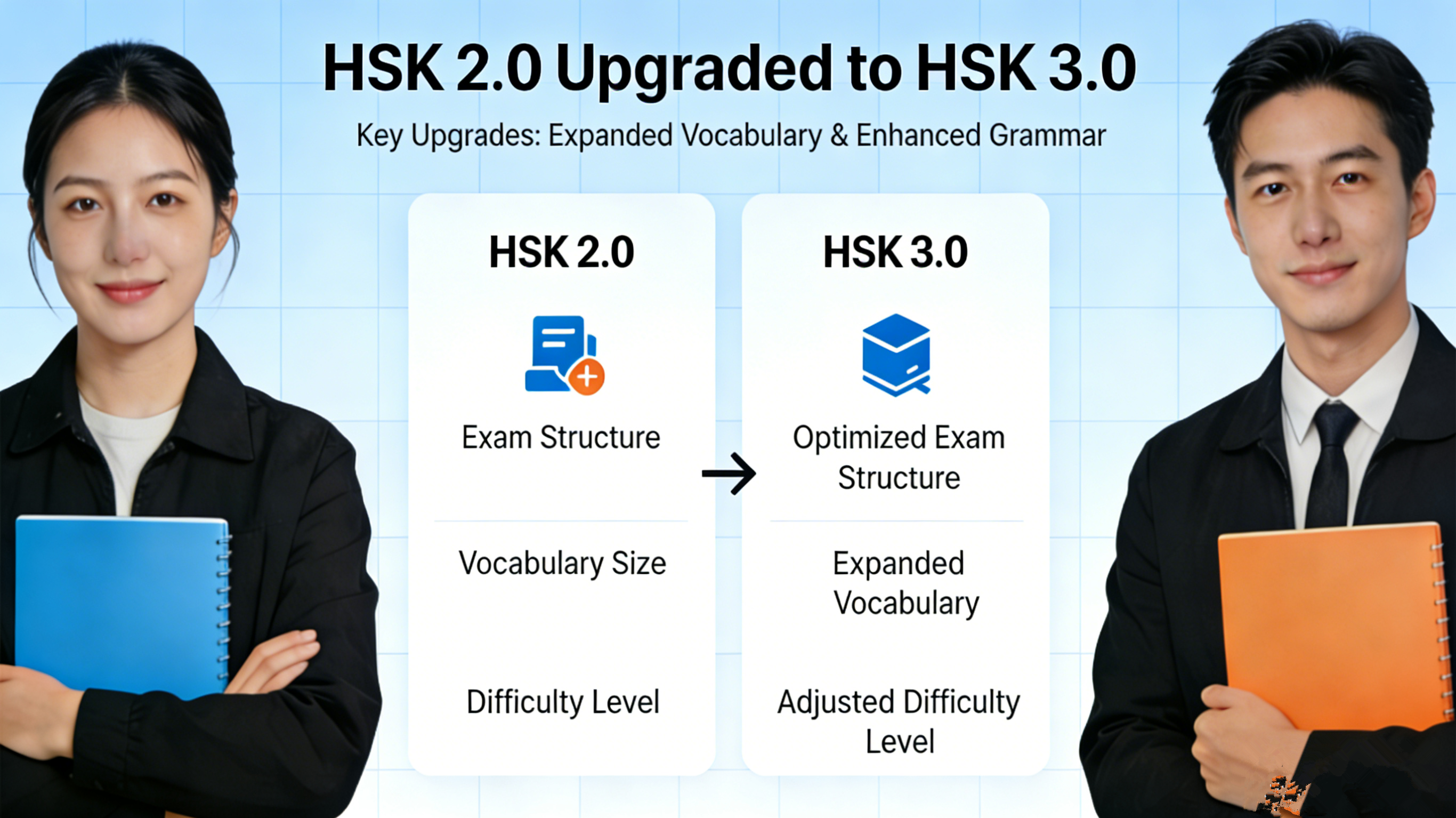
In summary, while the overall structure of HSK remains familiar, the transition to HSK 3.0 reflects a clear shift toward stronger language comprehension and practical communication skills. For beginners, this means building a more solid foundation in vocabulary and sentence-level understanding from the very beginning.
For learners preparing for the HSK exam, structured training can significantly improve efficiency and confidence. At eBLCU.com (Beijing Language and Culture University Online Platform), our HSK preparation courses are currently designed based on the HSK 2.0 standard, which remains the primary format used in most test centers today.
At the same time, it is important to note that HSK 2.0 and HSK 3.0 are not in conflict. The 2.0 system provides a solid and essential foundation, while HSK 3.0 represents an upgraded and more comprehensive assessment of Chinese proficiency. Therefore, learning through the HSK 2.0 framework will still effectively support your transition to the new standard.
Explore our HSK preparation courses and start your learning journey today: