BLCU Continuing Education College
Chinese Language Education Platform

Sign Up
Log in
BLCU Continuing Education College
Chinese Language Education Platform
Today we’re talking about something practical, and honestly essential if you’re learning Chinese or planning to visit China, how to order coffee in Chinese. In recent years, several local Chinese coffee brands have begun to rise, and drinking coffee has become increasingly popular. So grab your own cup of coffee, and let’s start with the basics.

Most coffee names in Chinese are actually transliterations, so they sound pretty close to the English words you already know.
You’ll hear:
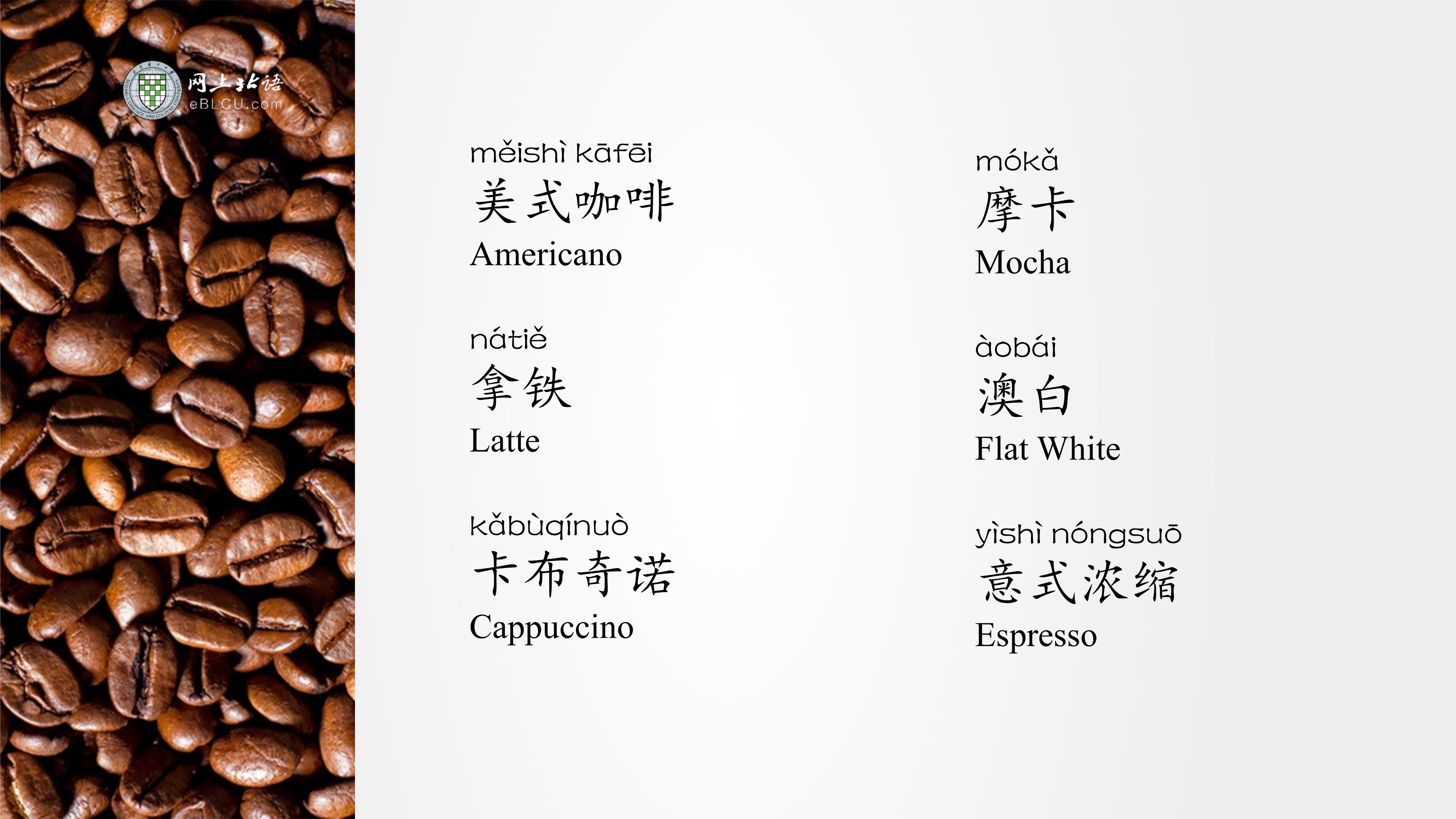
Americano — 美式咖啡 měishì kāfēi
The 美 měi is coming from America 美国 měiguó. 美式 měishì actually means American style.
Latte — 拿铁 nátiě
Cappuccino — 卡布奇诺 kǎbùqínuò
Mocha — 摩卡 mókǎ
Flat White — 澳白 àobái
The Chinese translation of “Flat White” varies, and different coffee shops may use different names. At Starbucks, it’s called 馥瑞白 fùruìbái, where 馥瑞 fùruì is from the pronunciation of “flat” and also carries the meaning of fragrance in Chinese. At the Chinese brand 瑞幸 ruìxìng Luckin Coffee, it’s called 澳瑞白 àoruìbái. The most commonly used name, however, is 澳白 àobái, where 澳 ào refers to 澳大利亚 àodàlìyà Australia and 白 bái is the translation of “white.”
Espresso — 意式浓缩 yìshì nóngsuō
This term is not related to pronunciation. 意 yì comes from Italy, and 意式 yìshì means Italian-style. 浓缩 nóngsuō means concentrated coffee.
Now let’s talk about what you’ll actually say when you order.
Do you like hot coffee or iced?
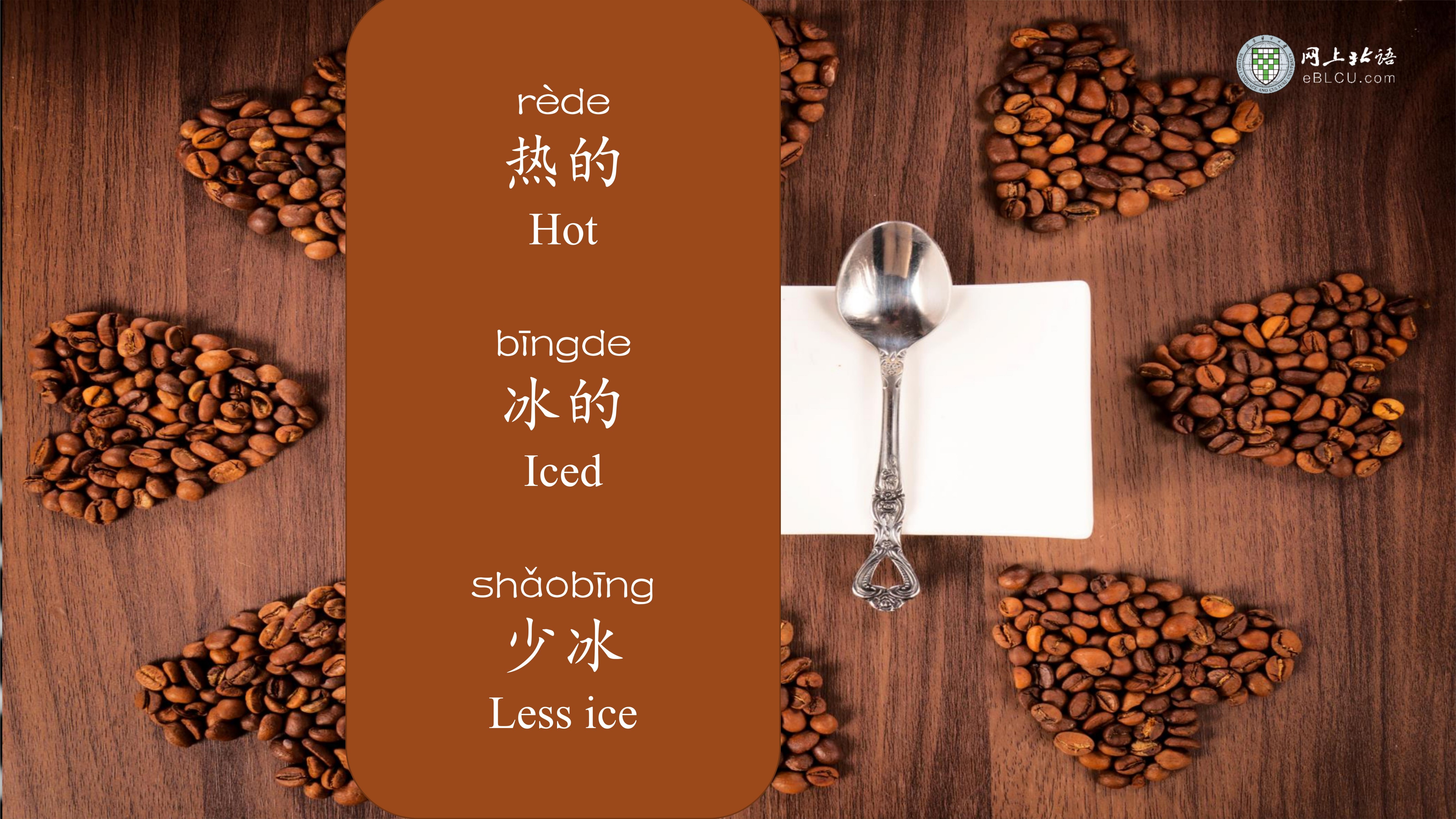
Hot — 热的 rède
Iced — 冰的 bīngde
Less ice — 少冰 shǎobīng
And for the milk options, you can use:
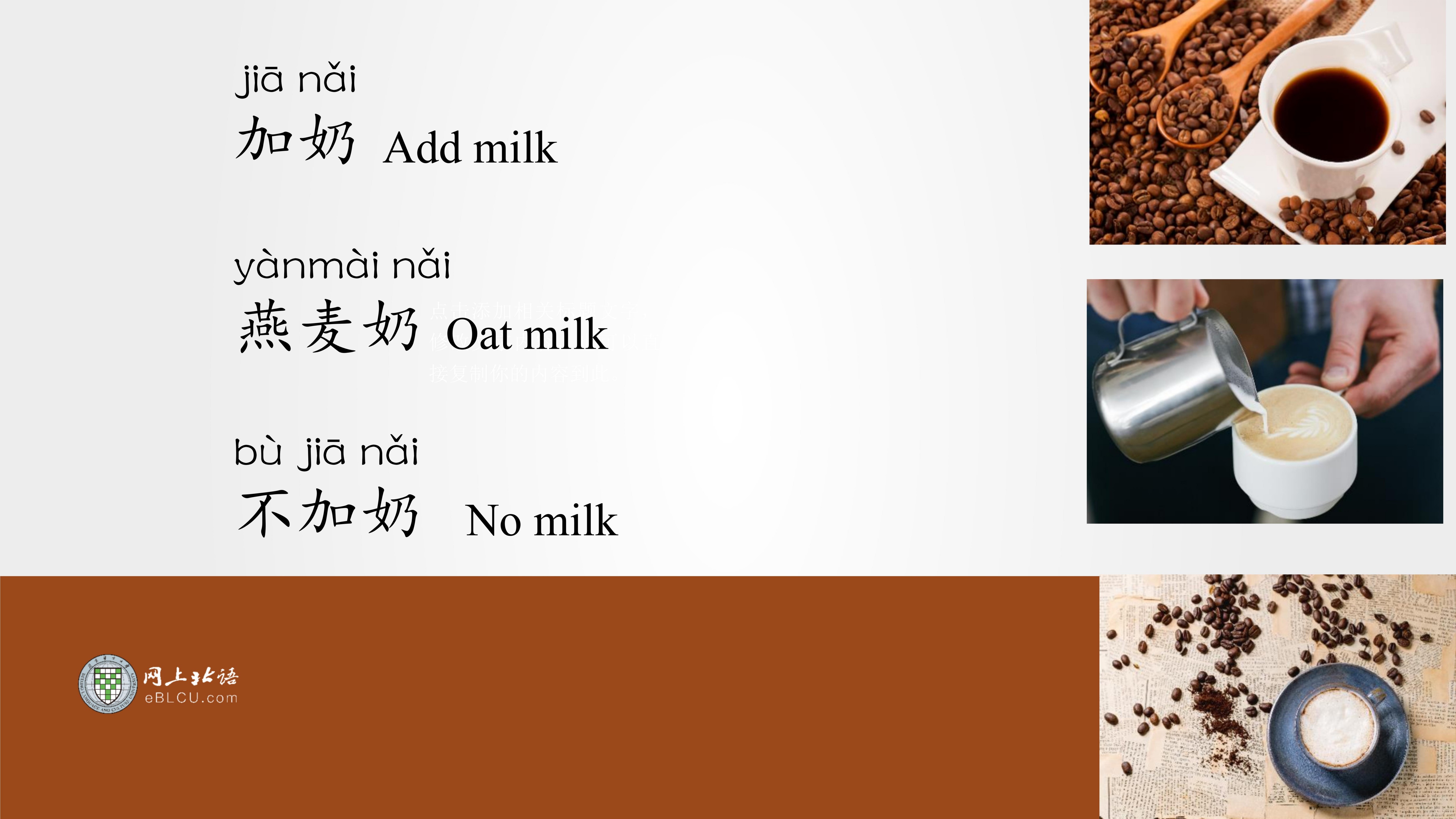
加奶 jiā nǎi Add milk
燕麦奶 yànmài nǎi Oat milk
不加奶 bù jiā nǎi No milk
For sugar levels:
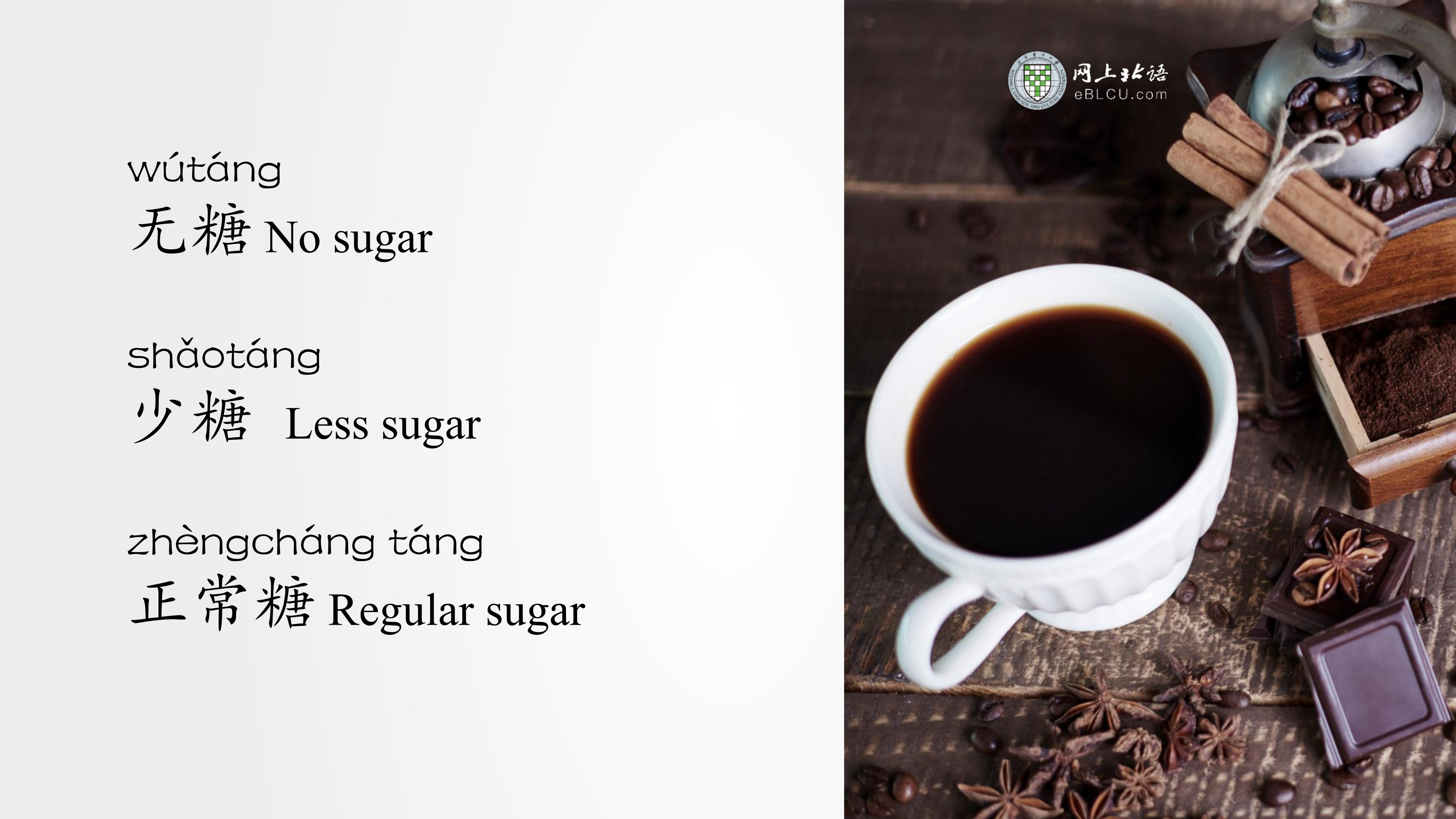
No sugar — 无糖 wútáng
Less sugar — 少糖 shǎotáng
Regular sugar — 正常糖 zhèngcháng táng
Here’s an example order you can try:
一杯冰的拿铁,少糖,加燕麦奶。 yì bēi bīng de nátiě, shǎotáng, jiā yànmài nǎi.
One iced latte, less sugar, with oat milk.

The coffee scene in China has grown incredibly fast. And you’ll see both global and local names, but the local ones are doing really well.
Some of the biggest Chinese coffee chains include:
Luckin Coffee, or 瑞幸咖啡 ruìxìng kāfēi should be the largest chain in China now. Also Cotti Coffee, 库迪咖啡 kùdí kāfēi which was founded by the former executives of Luckin Coffee. There are also some other famous local brands like Manner Coffee, NOWWA Coffee. These brands are especially popular among young people, and they often have creative drinks that you won’t find anywhere else.
Now let’s talk about something really interesting:
what makes Chinese coffee culture different from the West.
Creative flavors
Chinese coffee shops love to experiment. So instead of just traditional espresso drinks, you’ll find all kinds of creative combinations—espresso with jasmine flavors, coconut milk, fresh fruit juice, and more. It blends coffee with the fun, flavorful style, just like bubble tea.
A digital-first way of drinking coffee
Another major difference is how digital everything is.
In China, most young people order coffee through apps.
你用手机app点咖啡,然后带走或者外卖。
nǐ yòng shǒujī app diǎn kāfēi, ránhòu dàizǒu huòzhě wàimài.
You pick a shop on your phone, order your drink, and then either:
pick it up at a small takeout-only store, or
have it delivered straight to your home or office.
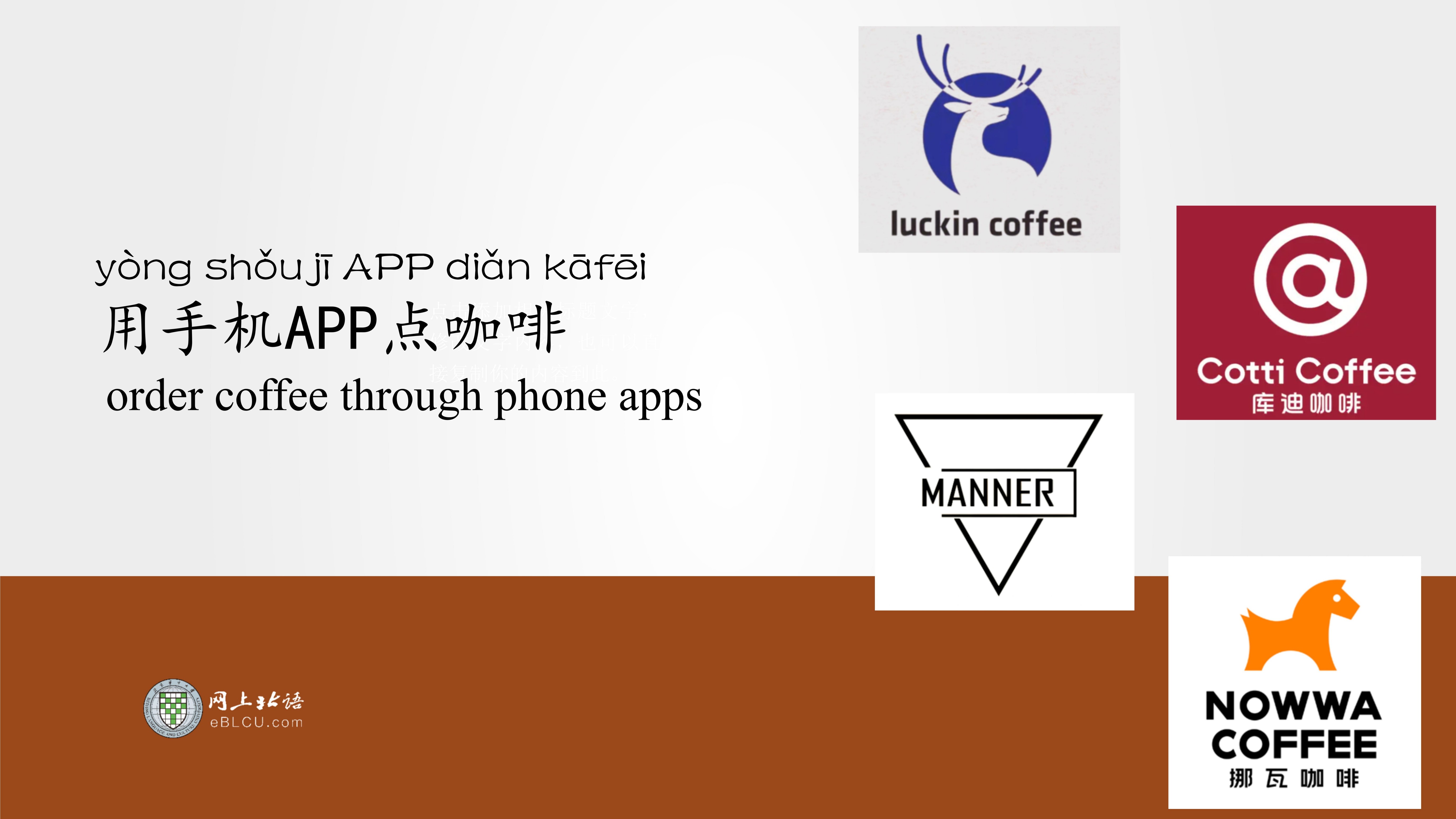
Brands like 瑞幸 ruìxìng Luckin Coffee are built entirely around this model. Most of their stores don’t even offer seating. And because the shops are small and the rent is low, the coffee is much cheaper.
For example, I often use coupons from the Luckin app and get an Americano for 九块九 jiǔ kuài jiǔ 9.9 RMB. Compare that to Starbucks, where a regular Americano is around 27 RMB.
So it’s no surprise that Chinese app-based chains have taken a lot of market share from 星巴克 xīngbākè Starbucks or Costa kind of brands in recent years.
Ordering coffee is just one small part of daily communication in Mandarin.
If you want to learn more practical Chinese like this—phrases you can use immediately—then it might be worth joining an online course.
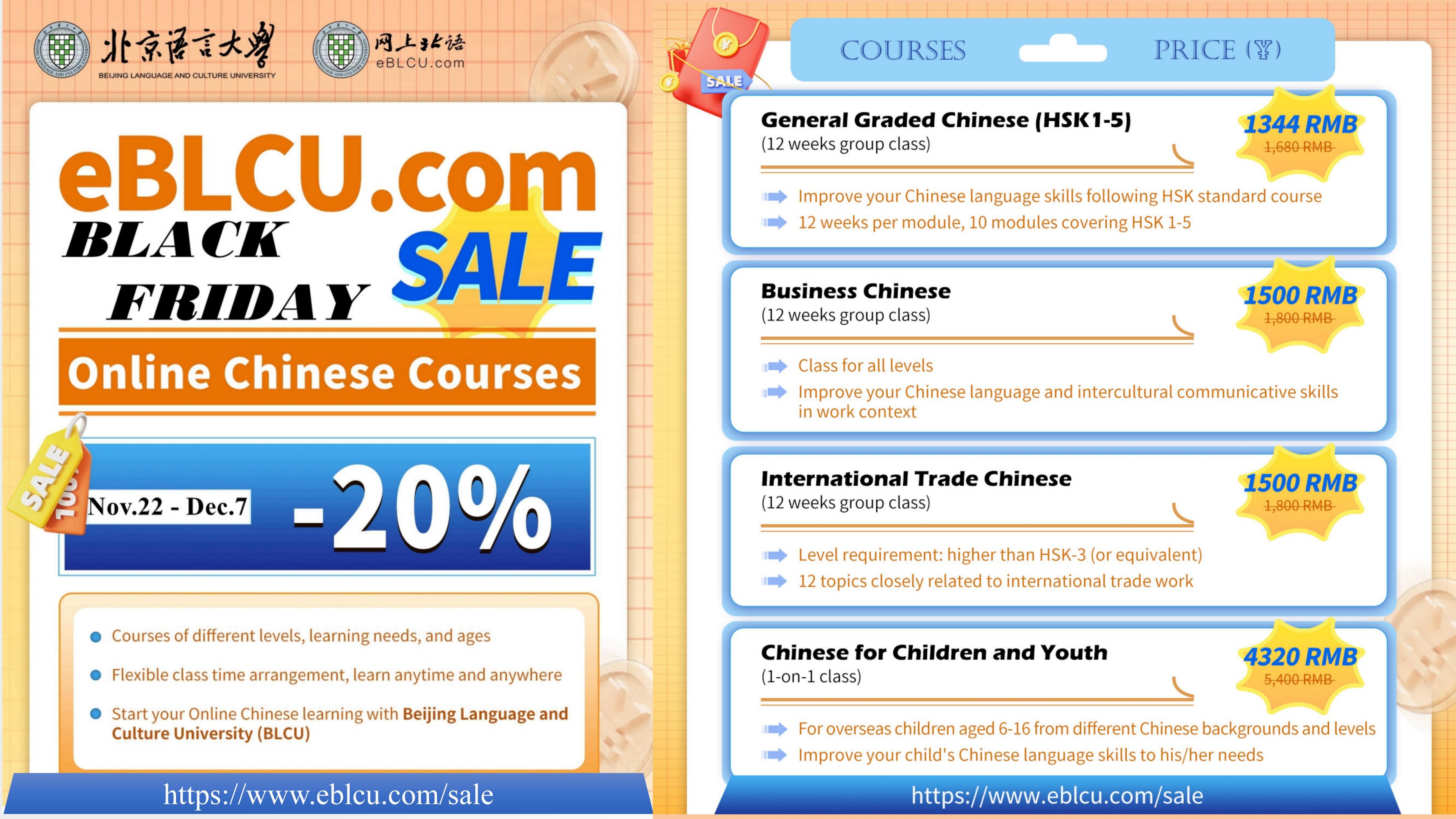
BLCU Online, from Beijing Language and Culture University, offers structured and interactive Chinese programs including:
General Chinese
Business Chinese
Chinese for Kids
Both in Group classes or 1-on-1
You learn with Chinese teachers, with a flexible schedule, all online.
We are having a 20% off for most of our group Chinese classes!
If you’re interested, you can learn more or join the latest promotions at:
I hope the next time you’re in China—or at a Chinese café anywhere in the world—you’ll feel confident ordering your drink in Mandarin. And until next time, happy learning—and enjoy your coffee.